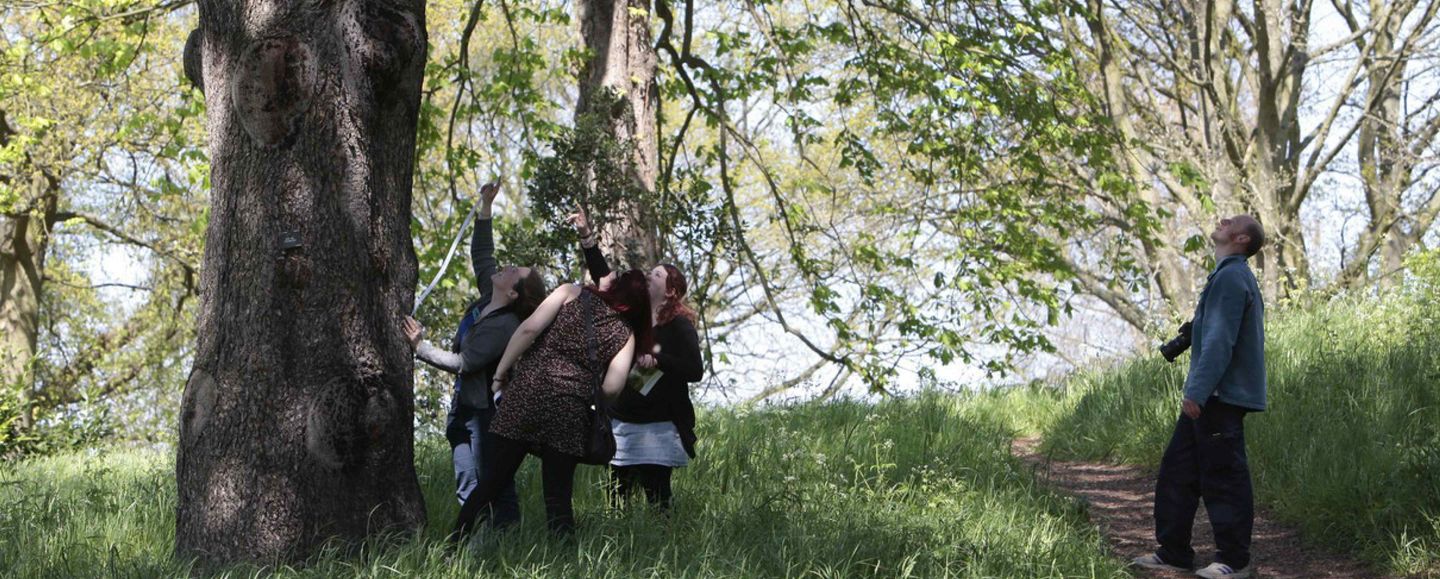
Bugs Count – join in our nationwide bug hunt
The best time to do this survey is from May to November.
Help us investigate how the built environment affects invertebrates

Do you know what bugs are living near you? Take part in Bugs Count and discover the incredible variety of invertebrates that make their home around us.
Find as many bugs as you can in our timed challenges and keep a special eye out for the six Species Quest bugs.
Your findings will help scientists learn more about the distribution of invertebrates across the country and how the urban environment may be affecting them.
Crawlies aren't creepy!
Bugs, or invertebrates, are a vital part of our environment. They can pollinate plants, recycle nutrients, and they provide an important food source for birds and mammals.
Bugs counted so far
How to take part
Step 1 - Download and print the documents below in colour.
Step 2 - Find a suitable area and start looking for bugs!
Step 3 - Tell us what you find using our simple online form.
Did you know?
Despite their names, Glow Worms (Lampyris noctiluca) are actually beetles. Only the flightless females can glow - to attract the flying males.
Ready to enter your results online?
Just want to submit a Species Quest sighting?
Use the form below to tell us about a Species Quest bug you've spotted outside the survey. Please include a photo if you can.
Download the Bugs Count app
Browse ID tips, photos, facts, and submit your Species Quest observations direct from your mobile phone.
Problems entering your results online?
Send your results to: FREEPOST RSCH-CHYJ-HYYC, OPAL, Centre for Environmental Policy, Imperial College, South Kensington, London SW7 2AZ.
Downloads - what you need to get involved
Field notebook:Instructions and recording sheet |
Pocket ID guide:Illustrated cards to help you identify the bugs you find |
Species Quest:Can you find one of these six species? |
||
|
Alternative Pocket ID Guide (PDF) - Prints on fewer pages |
||||
You may download these documents for use in the context of the OPAL project only. All other rights are reserved.
Group leaders and teachers
Download our group leader support pack, teaching supplement and example risk assessment.
View the results so far

Bugs Count is being led by the Natural History Museum.
Policy and regulation
To find out about the current health of UK biodiversity and England's 10-year strategy to protect wildlife, visit:
Field notebook:
Pocket ID guide:
Species Quest: