water survey
Silwood Park science fun day
As promised here are some piccies from the event we went to last weekend (10th July) at Silwood Park near Ascot. We were lucky to have a gorgeous sunny day (unlike the wet weekend just gone!) and there were loads of fun activities. Here is just a small selection...
The Silwood Park main building - what a nice place to go to work - it was very peaceful there with lots of trees and open space. I was envious (but then I do get to walk underneath a dinosaur to get to my office each morning which is also pretty cool!).
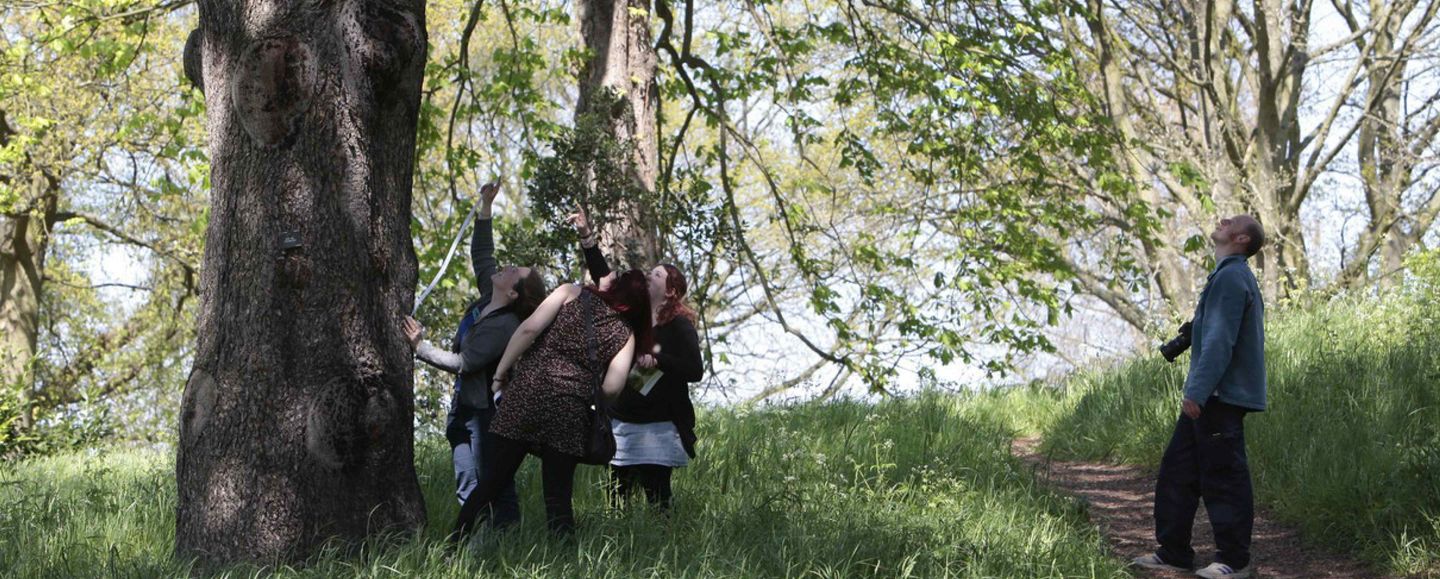
Lots of people getting involved...
Me at the Bugs Count stand, showing some of our live bugs collected earlier that morning...
A family pond dipping as part of the OPAL Water Survey, being helped by Neil (in the white T-shirt).
The OPAL Weather Roadshow - this was the first time I'd seen the roadshow as it's been travelling around the country all year. You can try being a weather presenter, or make a tornado in a bottle! In front of the trailer are candice who works on OPAL at Imperial College in London, and Geoff Jenkins from the Royal Meteorological Society who helped to develop the OPAL Climate Survey.
And last but by no means least, Sarah, the OPAL media and communications officer. She arrived in style on the back of Martin's motorbike (Martin works with us here at the NHM on OPAL too). Sarah's keen to get involved in writing this museum blog, so look out for guest posts by her over the coming weeks!
(nice picture!)
Humongous hoppers spotted in central London

How cool is this!?! To launch the OPAL Water Survey, the OPAL Communications Officer (Laura) arranged for some huge frogs to be projected on to Battersea Power Station last night. How great does this look?! I think they should keep them there permanently. Good work Laura, it looks fab. Now it's time to get out pond dipping...
- The Natural History Museum
- Login or register to post comments
Take part
Discover the health of your local pond and help scientists with valuable research

Take part in the OPAL water survey and discover what animals living in the water can tell us about its quality. It's fun, you'll learn new skills and your results will help scientists learn more about the health of lakes and ponds across the country.
What you need to get started
All the instructions and guides you need can be downloaded below. You'll also require a few household items (listed in the field guide) and if possible some pH strips (available from most garden centres).
Some of you will have received one of our survey packs. These contain all the necessary downloads and pH strips, so there is no need for you to download the items below.
We strongly recommend that you print all documents in colour.
Please show care and respect to our environment.
Ponds and lakes are home to many important creatures.
Need some pH strips?
Email your address and the number you require to Laura Hill, opal [at] imperial [dot] ac [dot] uk.
Finding a pond
Before you start your survey, you'll need to choose a suitable pond or lake. You may already have somewhere in mind, but if not we've prepared a guide on the many tools you can use to find somewhere suitable near you.
Downloads - what you need to take part
Alternatively, download the whole survey pack as one zip file
You may download these documents for use in the context of the OPAL project only. All other rights are reserved.
Group leader and safety information
Group leaders may benefit from our support pack with information and ideas on planning a group event, and additional safety information from the Royal Society for the Protection of Accidents (RoSPA).
Freezing frogs
Just a few moments ago I received an email from Pond Conservation, one of the groups that OPAL is working with to develop our Water Survey (which launches in May). The email was a report of their recent study into the reasons why a lot of frogs and fish may have died this winter due to ponds freezing over. This was the hardest winter for 30 years with some ponds staying frozen for several weeks at a time. When they finally thawed, a lot of pond owners found dead amphibians and fish. So Pond Conservation did a bit of research with the pond owners to find out why this might be and how we can prevent it in future. You can read a summary of their report here. It makes very interesting reading, and some methods that people used to think helped, such as making a hole in the ice, turned out not to have any effect. It seems that keeping your pond shallow, without too many fallen leaves and silt at the bottom, and with a good range of underwater plants, mosses and algae seems to be the answer (or at least part of it).
I wonder if this loss of amphibians will have an effect on how many we see this spring in the OPAL Water Survey. The Water Survey pack includes a guide to amphibians as well as aquatic invertebrates, dragonflies and duckweeds. The OPAL Water Centre team have been super busy developing the survey and doing their own pond research across the country. You can read about a typical day in the life of the OPAL water centre team written by Simon.
Well the bad weather doesn't seem to have affected amphibian numbers in the museum's wildlife garden pond too badly - John just went out to take some photos for a Nature Live talk he is giving at the weekend and he said he couldn't believe how many there were - especially toads. So here's a piccie of some frogs in the wildife garden pond showing that Spring has finally sprung!
- The Natural History Museum
- Login or register to post comments